What Is Zeutering? Is It a Real Alternative to Neutering a Dog?

Written by Chyrle Bonk DVM
Updated Apr 11, 2026

Zeutering vs Traditional Neutering
Your veterinarian will tell you over and over again about the benefits of neutering your dog, but many pet parents are apprehensive about surgery and wish that there was another way. This may lead them to something called Zeuterin, a chemical alternative to surgical castration. While there are pros and cons to both surgery and chemical castration, as of 2026, Zeuterin is no longer available. Still curious about it? Let’s look at what Zeuterin is and how it differs from traditional surgical castration.
What is Zeuterin?
Zeuterin is a non-surgical sterilization method that uses a zinc-based injection to permanently sterilize male dogs. It's a compound called zinc gluconate. In this product, the zinc gluconate is neutralized with arginine to make it a more favorable pH in order to prevent excessive tissue irritation. Basically, it’s an injectable solution used to permanently sterilize male dogs without surgery.
How Zeuterin Works
Zeuterin works by destroying sperm-producing cells in the testicles and causing scarring that prevents future sperm production. It’s injected into the center of each testicle where it acts as a spermicide, killing spermatozoa of all stages. The inflammation that ensues leads to irreversible fibrosis of the testicle and permanent sterilization. The testicles then atrophy, or shrink, over time with dogs maintaining some level of testosterone production.
FDA Approval History
Zinc gluconate started its chemical castration story as an international drug that gained FDA approval in United States in 2003. It was sold under the name Neutrosol until it was acquired by the Ark Sciences company who launched the name Zeuterin in 2014.
What Dogs Could Get Zeuterin?
Zeuterin was initially approved for dogs between three and 10 months of age in the United States with a testicular width of 10-27 mm. Don’t know your dog’s testicular width? Don’t worry, the product came with a handy measuring tool for your veterinarian to use.
Zeuterin vs. Traditional Surgical Neutering
How do surgical neutering and Zeuterin for dogs compare? Let’s look at what each one entails.
Surgical Neutering
When your dog is neutered the traditional, surgical way, they are put under general anesthesia, which requires a pre-surgical exam and often blood work to make sure a pup is healthy enough to handle the anesthesia. From there, an incision is made cranial to, or in front of, the scrotum; the testicles are pushed through the incision, and the spermatic cord is ligated, removing the testicles. The incision is then closed and dogs typically go home with pain medication and potentially an e-collar. The procedure requires a dog to be at the veterinary clinic for at least a day, possibly overnight.
The Zinc Neuter Method
Zeutering doesn’t require general anesthesia, though sedation is recommended to keep a dog still enough to ensure a proper injection technique. Injecting Zeuterin is a little different than a vaccine injection, and it requires a veterinarian to be certified in the technique to be sure it’s done appropriately.
The product is injected into the center of each testicle where it then disperses to the rest of the testicular tissue, killing all stages of spermatozoa and inciting inflammation which eventually creates the fibrinous scar tissue that causes permanent sterilization.
Sedation can be reversed, and most dogs are ready to go home within a few hours rather than an entire day.
Zeuterin vs. Surgical Neutering: What’s the Difference?
Here’s a quick comparison to help you see how these two approaches stack up.
Feature | Zeuterin (Zinc Neuter) | Traditional Surgical Neutering |
Procedure Type | Injection | Surgery |
Anesthesia | Not required (sedation recommended) | Required (general anesthesia) |
Incision | None | Yes |
Recovery Time | Typically a few hours | Several days to 10+ days |
Time at Vet | Short visit | Half-day to overnight |
Hormone Retention | Some testosterone remains | Testosterone eliminated |
Pain Level | Mild to moderate (short-term) | Moderate (managed with meds) |
Availability | Not currently available | Widely available |
Suitable for Cryptorchid Dogs | No | Yes |
Key Differences
The biggest difference between surgical and zinc neutering is the use of anesthesia. Surgical castration requires general anesthesia, and Zeuterin for dogs doesn’t. For some pet parents, that’s all the difference they need.
Another difference is that Zeuterin is an injection, while surgical neutering requires an incision that then needs to be monitored for proper healing, infection, etc. Zinc neutering is also faster, allowing dogs to go home sooner than with surgery.
Is Neutering or Zeuterin for Dogs Better?
Dogs that have health issues that make anesthesia a concern may benefit from zeutering, though veterinarians have many protocols in place to make anesthesia as safe as possible. Dogs that are cryptorchid, where a testicle is retained in the abdominal cavity instead of dropping into the scrotum, aren’t candidates for Zeuterin and will still need surgery for a complete neuter.
Benefits and Risks of Zeuterin Over Traditional Neutering
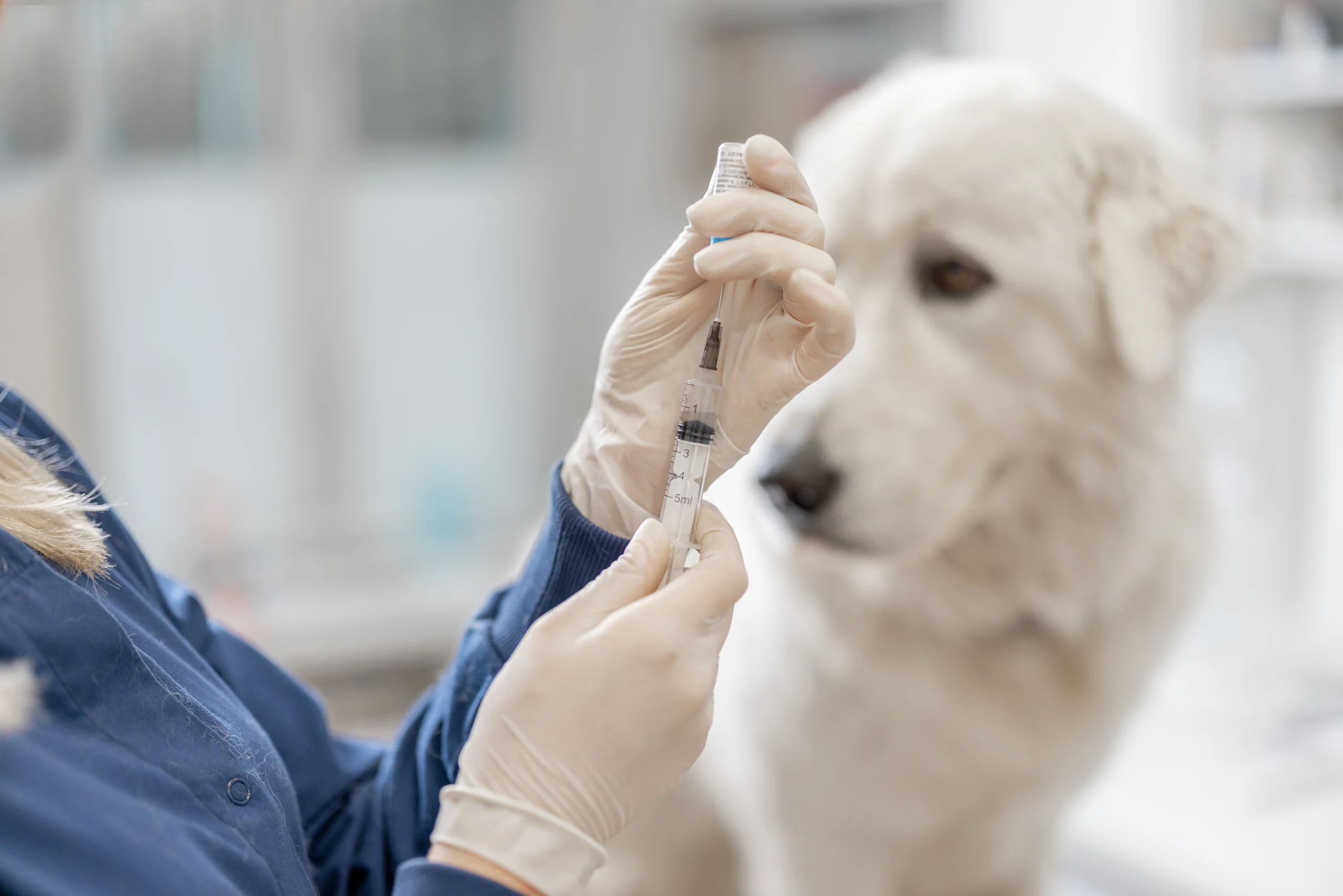
All things that we veterinarians do for dogs carry a list of benefits and a list of risks, neutering included.
Benefits of Zeuterin
No Anesthesia: Though anesthesia medications have come a long way since their introduction and are considered safe when used properly, they aren’t without their risks. This means that Zeuterin’s main benefit is that a dog doesn’t have to undergo anesthesia as they would with surgical neutering.
No Incision: Because zinc neutering is an injection, there is no incision which can potentially reopen or become infected, giving it the edge over surgery that does have an incision.
Less Time: Without the use of general anesthesia and surgical technique, zeutering is much faster, allowing more sterilizations per time period, and animals can go home sooner.
Retains Hormone Levels: According to a study in 2013, dogs neutered with zinc gluconate retain higher levels of testosterone which can have beneficial effects such as reduced cranial cruciate injuries, hip dysplasia, and some types of cancer.
Risks or Downsides to Zeuterin for Dogs
Pain: Clinical research has found that about 4% of dogs experience mild pain or sensitivity following a Zeuterin injection.
Not for Cryptorchids: Zeuterin won’t effectively sterilize dogs with one or more retained testicles.
Requires Extra Certification: Veterinarians have to undergo certification to ensure proper technique before using Zeuterin.
Not Available: The biggest downside to Zeuterin is the lack of adoption by veterinarians that has made it so that the product is no longer available.
Bottom Line
Zeuterin is an effective way of sterilizing male dogs without the use of anesthesia. Side effects are minimal and typically managed with proper pain control. Dogs are allowed to go home sooner, and pet parents have less to monitor post procedure.
Is Zeuterin Still Available?
Though Zeuterin seems to have the advantage over surgical neutering, veterinarians and pet parents were slow to adopt this new method. This led to declining sales that ultimately took the product off the market in 2016. Though some veterinarians may have a residual supply somewhere on their back shelves, it is currently out of production.
Alternatives to Traditional Neutering a Dog
Zinc neutering may not currently be an option for male dogs, but there are alternatives to traditional neutering in dogs.
Option | Permanent | Surgery | Hormones Affected | Availability | Key Consideration |
Calcium Chloride Injection | Yes | No | Some testosterone retained | Limited / not widely available | Still being studied, not widely offered |
Hormone Implant (e.g., Suprelorin) | No | No | Temporarily suppresses testosterone | Limited in U.S. | Needs repeat treatments every 6–12 months |
Vasectomy | Yes | Yes | Hormones remain intact | Limited availability | Prevents reproduction but not hormone-driven behaviors |
No Intervention | No | No | No change | Always available | Risk of unwanted litters and certain health issues |
Most of these alternatives are limited in availability or still being studied, which is why traditional neutering remains the most widely used option, but talk to your vet about what’s possible for your dog.
Calcium Chloride
Similar to Zeuterin, studies show some promise injecting dog testicles with calcium chloride, causing sterilization without the use of anesthesia.
Hormone Therapy
For short-term, reversable castration, a hormone implant can be used. Suprelorin is a slow-release hormonal implant that goes under the skin of the neck, similar to a microchip. The sterilization effects last six to 12 months and can be repeated.
Vasectomy
In order to conserve the levels of reproductive hormones, a vasectomy can be performed. This is a surgery, but it’s one where the vas deferens, the tube that transports sperm from the testicles upward, is ligated. Testes and hormones remain intact, but a male dog cannot reproduce.
Nothing
I think you’d be hard pressed to find a vet that recommends nothing, unless it’s in the best interest of a dog’s health. With pet overpopulation being such a problem, it’s best to cut down on the number of unwanted puppies.
Cost of Dog Neutering

There are a lot of things to consider when it comes to neutering a dog, with cost being one of them. A traditional surgical neuter typically costs between $300-$500. Low-cost clinics may offer options as low as $100, and private clinics may cost over $500. The size of your dog is going to be a factor, as larger dogs often are more expensive.
How Pet Insurance Can Help
Dog pet insurance is designed to help with the costs of unexpected illnesses and injuries, making it easier to manage the bigger, unpredictable expenses of pet care. Vaccinations, wellness exams, and sterilization can be reimbursed for using a dog pet wellness plan, which helps you budget for routine care, including neutering your dog.
Zeuterin for Dogs
Neutering your dog provides a lot of benefits towards their health and behavior, however, surgical castration may not be right for every pup. While zinc neutering with Zeutrin is no longer an option, there are other routes that you can discuss with your veterinarian.
FAQs
It involves ligating the vas deferens, the tube that transports sperm from the testicles, while leaving the testes and hormones intact so the dog cannot reproduce.
Written by
Chyrle Bonk has been practicing veterinary medicine since 2010. Along with that, she fills her time writing veterinary content as a way to reach more pet owners than just those that come into the clinic. When not working, Dr. Bonk loves spending time with her family and critters somewhere outdoors.

Let’s get your pet covered
Call or click to get a quote