Spaying & Neutering a Cat: What to Expect Before, After, & Everything in Between

Written by Krista Watson
Updated May 5, 2026
Cat Spay Recovery Expectations
You’ve probably heard that you’re supposed to neuter your cat, but do you know what the process entails? Many pet owners have questions about this surgical procedure, including, “Is it is really necessary to neuter my cat?” Cat lovers might not even be entirely sure what neutering means. To put it simply, neutering refers to the removal of a male cat’s testicles and is recommended for most cats in order to reduce the feral feline population.
A neutered cat can’t reproduce, but that’s not the only reason vets recommend the procedure. After neutering or spaying, cats have a lower risk of developing certain cancers. They are also less likely to display unwanted behaviors like aggression or spraying to mark their territory, things no pet owner wants to deal with. Let’s walk through when to neuter a cat, what it costs, and why timing matters.
What Is Cat Spaying and Neutering?
One crucial thing to understand is that neutering technically differs from spaying, “fixing,” or sterilizing.
Neutering: A surgical procedure that removes a male cat’s testicles. Neutering a male cat is a brief, simple procedure. Rates vary but expect to pay between $100 and $500. When neutering your cat, the veterinarian will make a small cut in the cat’s scrotum and remove his testicles.
Spaying: A surgical procedure that removes a female cat’s ovaries and uterus. Spaying a female cat is a more invasive procedure, and the veterinarian will need to cut open your cat’s abdomen to remove the uterus and ovaries. This procedure costs anywhere from $300 to $800 and up.
Fixing / Sterilizing: An umbrella term for procedures that prevent fertility in both male and female cats.
Don’t let the prices deter you! Call around to multiple clinics and compare quotes. You should also ask about special discounts or promotions in your community. For example, some cities host free or very low-cost spaying and neutering once a year or more. It’s not unusual to pay only $15 or so during these events.
While the cost to neuter a cat is relatively affordable, sometimes you might want some help preparing. Consider adding an optional kitten wellness plan to help you budget for routine costs over the year, including neutering or spaying your cat.
Spaying and neutering are preventative care and not typically covered by insurance, but having a plan in place provides peace of mind, which we could all use a little more of. Get kitten insurance as soon as possible to prevent issues with preexisting conditions and to make sure your cat has access to the best care available.
When to Spay or Neuter a Cat
How old do cats have to be to get “fixed”? The precise recommendations have changed over the years. While professional opinions vary, generally, most cats are neutered/spayed around five or six months old. While very young kittens should not be spayed or neutered, studies suggest that sterilizing shelter cats as early as eight weeks old could be better for the cat’s health. Fortunately, there’s no cutoff age for neutering your cat. As long as the veterinarian deems them healthy enough for the procedure, even senior cats can be spayed or neutered.
Benefits of Spaying and Neutering a Cat
Some people argue that when you neuter a cat, you are denying them a fundamental part of being an animal. In truth, unspayed female cats can experience many pregnancies that are hard on their bodies. Unneutered males often escape the home and end up in fights. Besides, feral cat populations have exploded around the world, and there are more cats than available owners to care for them.
Reasons to Neuter or Spay Your Cat
The benefits of spaying and neutering look a little different for male and female cats, but both have a meaningful impact on long-term health and safety.
Male Cats (Neutered) | Female Cats (Spayed) |
May live up to 62% longer than intact males | May live up to 39% longer than intact females |
Less likely to roam, reducing risk from cars and predators (coyotes, snakes, birds of prey) | Lower risk of mammary neoplasia (breast cancer) |
Lower risk of wounds and infection from fighting | Prevents pregnancy complications |
Things to Consider Before Neutering
There are some cons to sterilizing your cat, whether it is through neutering or spaying. Female cats won’t be able to produce kittens, but, of course, there are plenty of kittens in shelters and rescues who need homes! Sterilized cats are also likely to gain more weight than intact ones. Additionally, as with any surgical procedure, there are inherent risks related to anesthesia and infection, but neutering is generally considered a very safe procedure for most cats.
Overall, the benefits of a neutered male cat or spayed female cat outweigh the potential negatives in most cases but talk to your vet about what’s best for your cat.
Before & After Effects of Neutering Your Cat
Before cats are sterilized, they are likely to display some undesirable behaviors. For females, that means going into heat. Signs your cat is in heat are agitation and spraying urine around the house as a way of trying to attract a mate.
Intact male cats are also notorious for spraying urine. They are more likely to do this when they smell or see another cat, as spraying is a way for your feline to claim their territory. Many owners become more than happy to neuter or spay their cat when this starts happening!
A few weeks after your cat’s procedure, you should begin to notice changes in their behavior. Even after neutering, some cats may still spray, especially if the behavior started before surgery, is tied to stress, or has become a learned habit, but most sterilized cats spray a lot less than intact ones. On the whole, they also become more affectionate and less likely to get into fights, a win-win for everyone.
Can Neutered or Spayed Cats Still Spray?
The first question on many pet owners mind is, “Can neutered cats spray?” Unfortunately, sterilization doesn’t automatically mean your cat won’t spray. However, they’ll almost certainly spray a lot less than they did previously thanks to the reduction in hormones.
Helping Your Cat Recover After Spaying or Neutering
Before the appointment, the veterinarian will likely ask that your cat abstain from eating the evening beforehand. The neutering procedure only lasts around 15 minutes or so, while spaying takes a bit longer, up to 30 minutes or so if there are no complications.
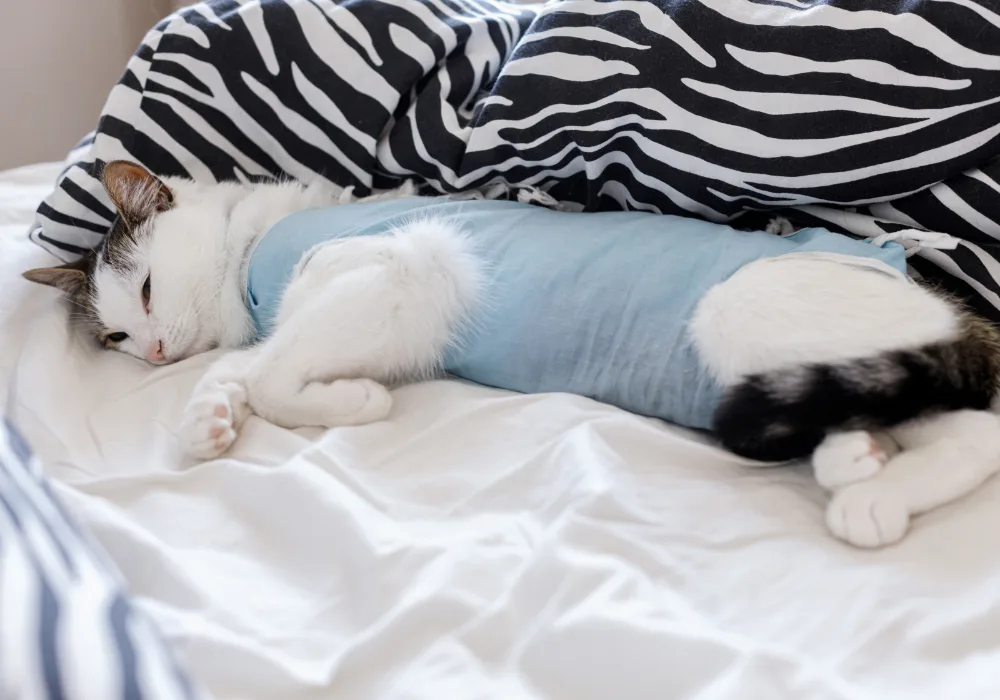
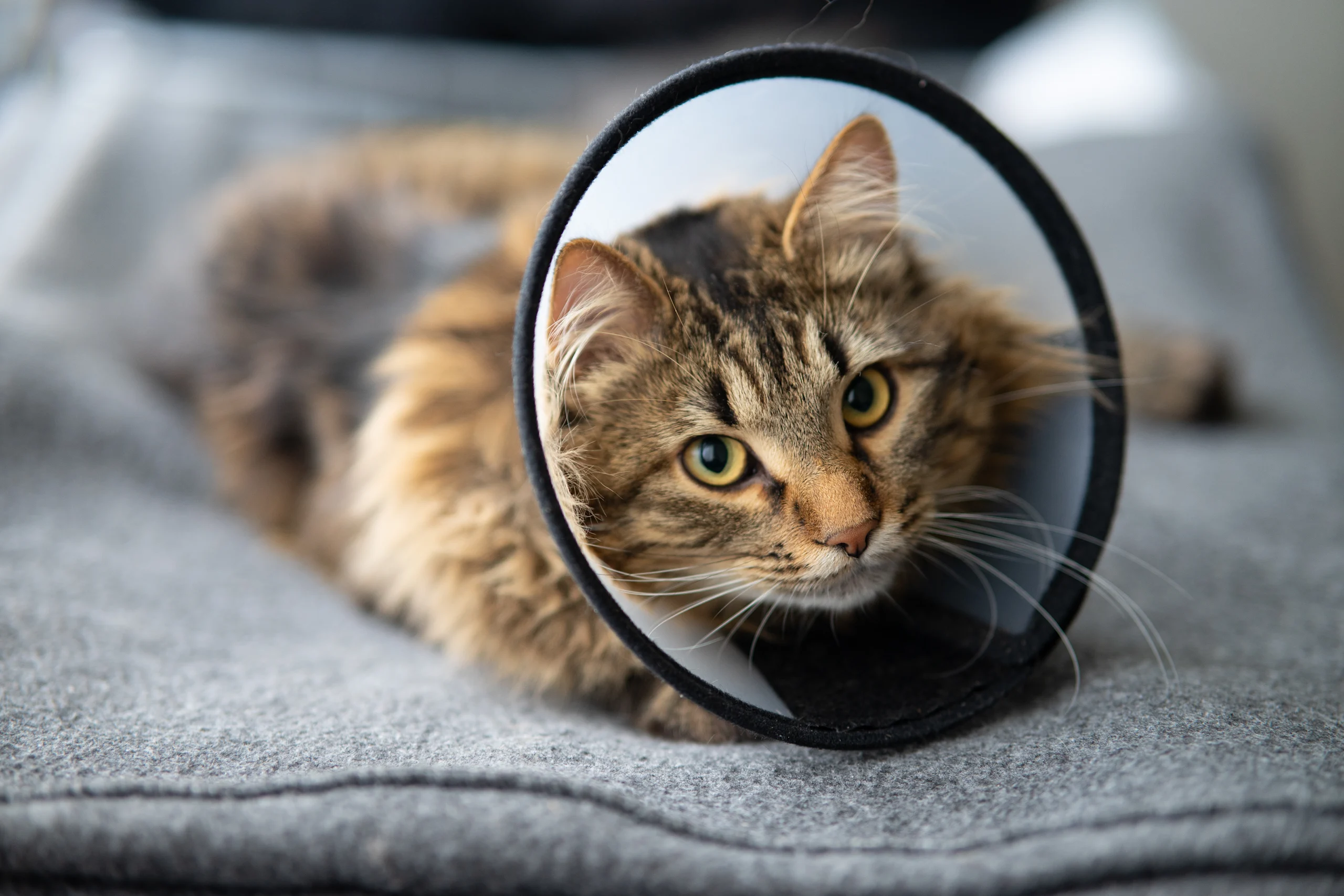
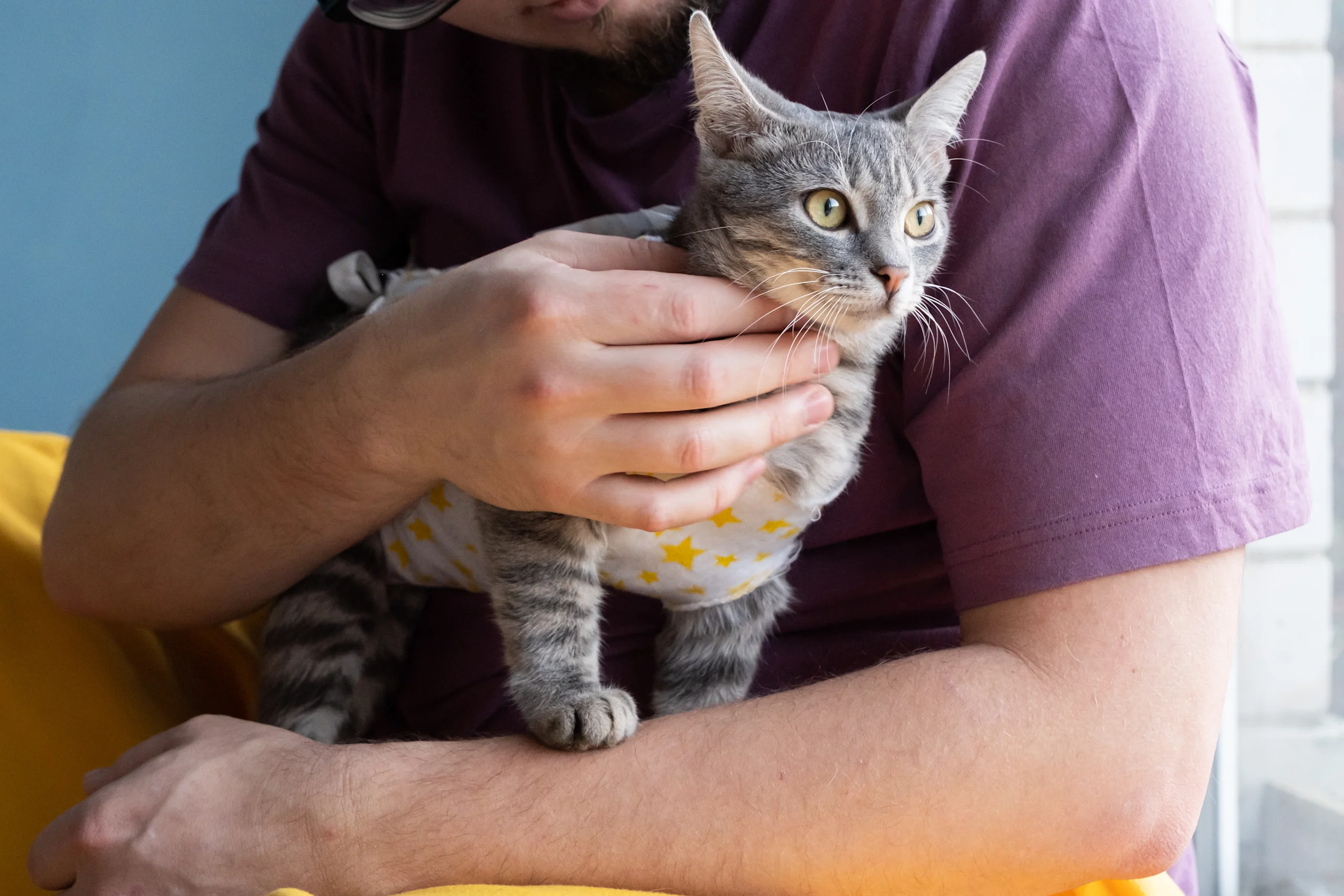
After surgery, you’ll notice your cat seems groggy from the anesthesia. They will probably have a cone placed around their neck to prevent them from trying to lick or scratch the stitches. They’ll need to be monitored for the first week or so to ensure they don’t jump or run around and split their stitches. Owners will also need to keep an eye on the surgical site to ensure it’s healing without issue.
While sterilizing your cat is generally regarded as a very safe surgical procedure, you’ll want to brush up on feline body language to make sure your little one is healing properly. Signs of pain or discomfort in a cat include:
Hiding
Decreased appetite
Decreased thirst
Not grooming themselves
Unusual vocalization
If your cat begins to display any of these signs, or if their incisions appear infected (red, swollen, exhibiting pus, etc.), call the vet right away.
Neutering Your Cat is Just the Start
There are a lot of terms used for sterilizing cats, but whatever you choose to call the process, sterilization offers health benefits and significantly cuts down on feral cat populations. Once the vet gives your kitty the green light for the procedure, schedule the appointment ASAP. You’ll be doing yourself and your cat a huge favor!
FAQs
It's a brief, simple procedure that typically costs between $100 and $500, involving a small cut in the scrotum to remove the testicles.
Written by
Krista Watson is a freelance writer and editor from North Carolina. She earned her bachelor's degree in International Studies at UNC-CH. She is the proud mother of a dog (Queso) and two cats (Ozzy and Gizmo). When she's not writing, she can be found taking walks at the local park with her dog or reading with her cats.

Let’s get your pet covered
Call or click to get a quote