
Dental Epulis
A dental epulis is a benign growth of gum tissue that develops along a dog's gumline, usually in middle-aged to senior dogs. It's not typically painful or dangerous, and surgical removal resolves it completely.

Written by Chyrle Bonk DVM
Updated Sep 11, 2026
Severity
Usually mild (benign growth)
Onset
Middle-aged to senior dogs
Duration
Until surgically removed
Common causes
Overgrowth of gum tissue; trigger unknown
Most dog parents rarely look in their dog’s mouth. Whether it be the bad breath or the fear of getting bitten that gets in their way, the fact of the matter is, a lot can be missed if we aren’t paying attention to the mouth’s inside. One scary looking but most likely harmless mouth issue in dogs is dental epulis, a benign tumor that grows from the gums around a dog’s teeth.
Epulis in Dogs: Summary
Dental epulis is dogs is one of the most common types of tumors that can appear in a dog’s mouth. Please don’t let the term tumor scare you, it simply refers to an abnormal growth. Tumors can be either benign (non-cancerous) or malignant (cancerous). Fortunately, epulis in dogs are benign.
Though they don’t spread to other areas of the body, they can cause significant discomfort locally by interfering with eating, and some types can do damage to local bone. Dental epulis isn’t the only type of tumor that can appear in a dog’s mouth, so getting a proper diagnosis is key in knowing what the best treatment plan will be.
Types of Oral Tumors in Dogs
Dental epulis is the most common tumor that can show up in a dog’s mouth according to a 2023 study published in the Journal of Advanced Veterinary and Animal Research, but there are other possibilities.
It’s important to keep in mind that dental epulis has gone through a recent rebranding as the term ‘epulis’ was considered nondescript and does nothing to describe the behavior of the tumor, according to Today’s Veterinary Practice. Throughout this article we will use both the new and older nomenclature to talk about these benign oral tumors.
Peripheral Odontogenic Fibroma
The most common of the epuli and formerly known as fibromatous epulis, peripheral odontogenic fibromas appear similar to gingival hyperplasia. These tumors most commonly occur due to some kind of irritation to the gums, such as a malocclusion where teeth rub abnormally on the gums.
Fibromatous epulis come from the periodontal tissues surrounding the teeth, they do not invade local tissue and don’t tend to become ulcerated.
Peripheral Odontogenic Fibroma-Ossifying Type
Previously known as ossifying epulis, peripheral odontogenic fibromas of the ossifying type are similar to fibromatous epulis but with a small twist. They also come from the fibrous periodontal tissue but have some bony, calcified tissue mixed in.
These tumors are a little more difficult to deal with and often require wider margins, potentially including parts of the jaw bone, to remove.
Acanthomatous Ameloblastoma
The least common type of epulis is acanthomatous epulis, now known as acanthomatous ameloblastoma. These tumors are the most worrisome of the epuli as they tend to invade local tissues, including the bone, often causing varying degrees of bony destruction. Though they can cause local damage, they don’t metastasize to other areas of the body.
Other Canine Oral Tumors
Beside epulis, the dog’s mouth is subject to numerous other tumors, both benign and malignant. Other benign tumors include:
Gingival hyperplasia
Papilloma
Chondroma
Osteoma
Malignant oral tumors in dogs include:
Melanoma
Squamous cell carcinoma
Fibrosarcoma
Osteosarcoma
Lymphosarcoma
Epulis Dog Symptoms and Identification
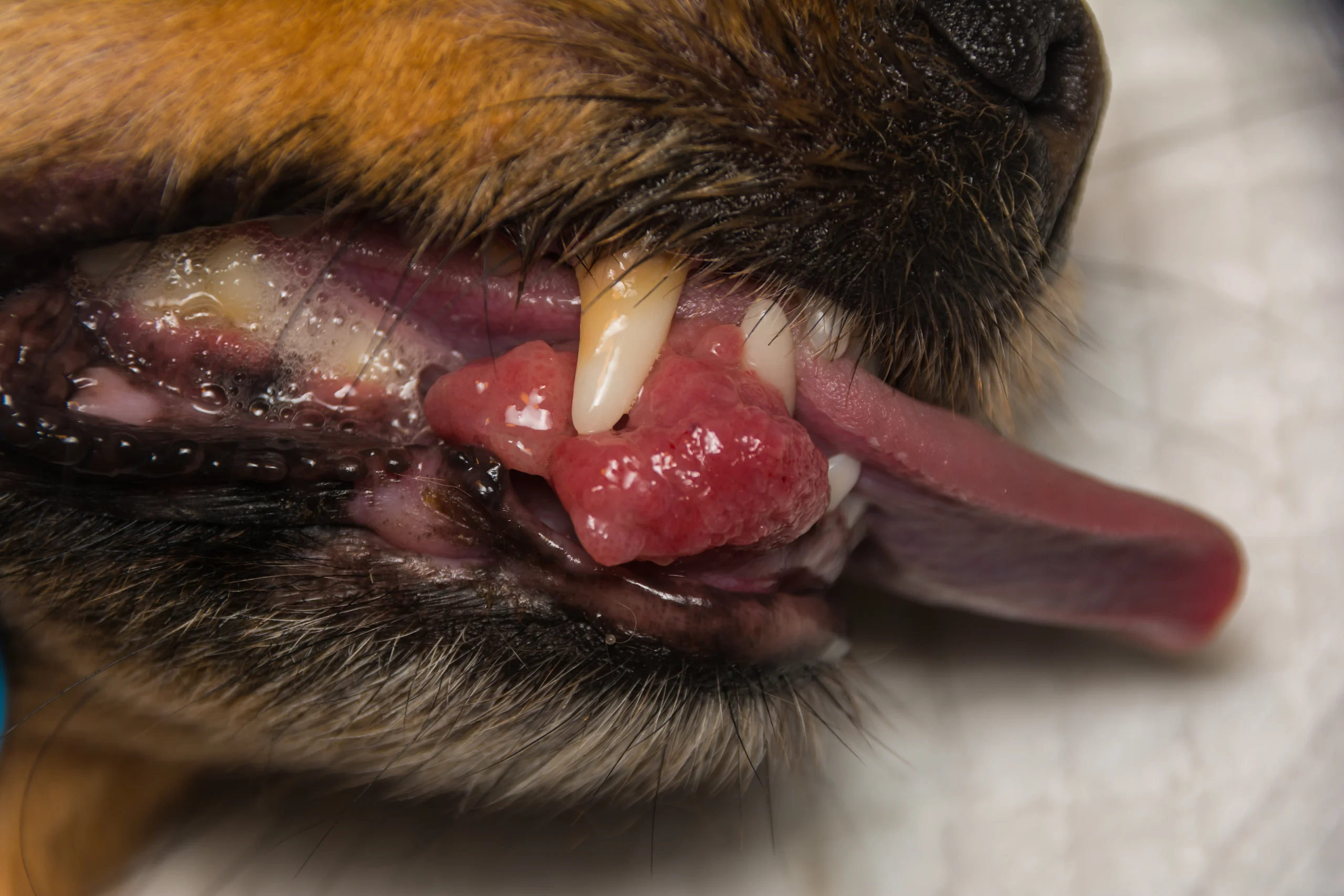
Unless you regularly brush your dog’s teeth, (which we hope you do!), epulis can get fairly large before you may notice them. These oral tumors can vary in size, shape, and texture, and tend to be the same color as the gums. Tumors may be lumpy, smooth, firmly attached or only attached by a small peduncle, or stalk.
As the lumps get larger, they can interfere with your dog’s eating, causing difficulty chewing, blood in the mouth, bad breath, and a decreased appetite. Dogs often have more than one oral tumor. Large tumors that are destructive to the underlying bone can also cause tooth loss.
Identification
A lump is a lump until proven otherwise. Oral tumors in dogs can look an awful lot alike, so a veterinary diagnosis is necessary to determine whether the tumor is an epulis or a malignant squamous cell carcinoma.
Causes and Risk Factors for Epulis in Dogs
The exact cause of epulis in dogs is unknown, though there does seem to be some correlation with irritation to the gums. Malocclusion, when the top and bottom teeth don’t line up correctly, can cause irritation on the gums that may increase the chance of developing epulis.
That being said, brachycephalic, or short-nosed breeds, have an increased incidence of epulis likely due to crowding of the teeth based on facial anatomy.
Commonly affected breeds include:
Boxers
Bulldogs
Shetland Sheepdogs
English Sheepdogs
Epulis tends to occur more often in older dogs.
How Vets Diagnose Epulis in Dogs
Diagnosing oral tumors in dogs starts with an examination. Whether you found the lump at home or your vet found it during a checkup, getting a good view of the tumor is the first step. This may involve sedation if your dog is overly painful or touchy about their mouth.
From there, getting a sample of the tumor is key. Samples may be taken via a fine-needle aspirate or biopsy and looked at in-house or sent to a pathologist. Dental radiographs or further imaging are also necessary to determine the extent of bony involvement, if any.
Treatment of Epulis Dogs
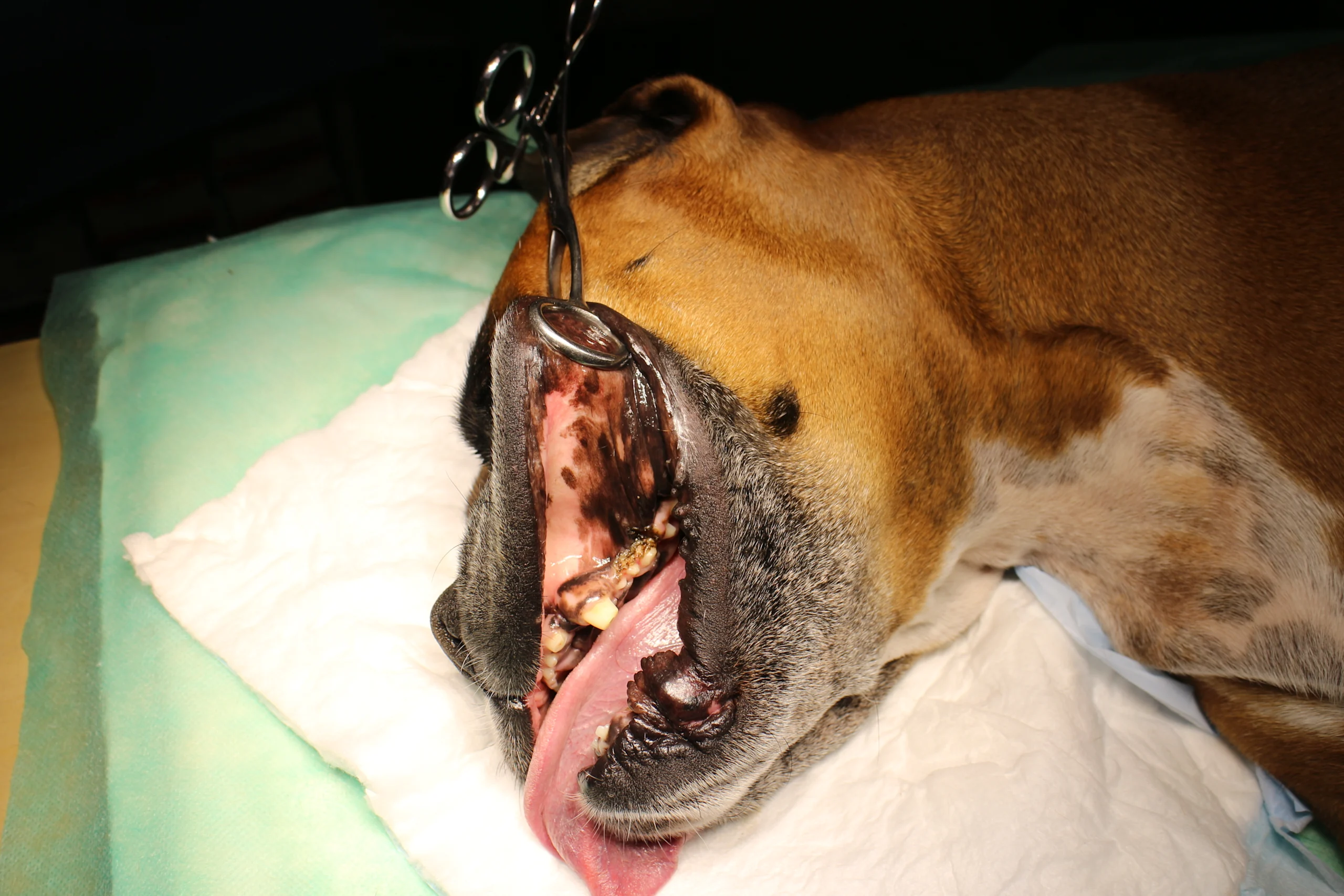
Surgical removal is necessary for all types of epulis in dogs.
Peripheral Odontogenic Fibroma: These are the easiest ones to remove, and can be done with cryosurgery or electrocautery. Follow-up treatments are rarely necessary.
Ossifying Fibromas: Due to the bony attachments, these can be a little more difficult. Cryosurgery or electrocautery may also work with wider margins than the non-ossifying types.
Acanthomatous ameloblastoma: These are a little more challenging, often requiring removal of a portion of the jaw bone. Chemotherapy or radiation may be necessary following removal as well.
Recovery and Management of Epulis in Dogs
The smaller the tumor, the better the outcome. Small peripheral odontogenic fibromas have a better chance of being fully removed, allowing for a smaller chance of recurrence, while larger tumors require large portions of the gums and potentially underlying bone to be removed.
Acanthomatous ameloblastomas are the most difficult to remove and carry the worst prognosis, as portions of the jaw bone often need to be removed which can have complications.
Veterinary Cost for Oral Tumors in Dogs
Diagnosing and treating oral tumors in dogs can be a lengthy and costly process with prices ranging based on the size and type of tumor as well as the location that you live.
Cost of Diagnosis and Biopsy
Sedation, bloodwork, imaging, and collecting a sample of the tumor can cost you between $500-$2,000+. The higher costs are associated with more advanced imaging, such as a CT scan or MRI.
Cost of Surgery or Advanced Treatments
There’s going to be a lot of variation in potential costs for treating oral tumors in dogs. A simple surgical removal may cost around $500, while a more in-depth procedure may run you $3,000 or more, and removal of a portion of the jaw can be up to $6,000.
Additional treatments, such as chemotherapy or radiation, can cost up to $10,000.
Pet Insurance Consideration for Dog Epulis
These are some scary numbers I just put up there. Purchasing a dog health insurance policy from Embrace Pet Insurance can help take some of the worry out of your dog’s oral tumor journey by helping with the costs associated with diagnosis and treatment.
To help with those everyday costs, including wellness exams, where epulis may be discovered, consider looking into a Routine Care Plan , which helps you budget for vaccinations, dental cleanings, and preventative medications as well.
Can Epulis in Dogs be Prevented?
Because we don’t understand the exact cause of epulis in dogs, we can’t entirely prevent it. However, we can do our due diligence in maintaining proper oral health and treating dental disease and malocclusions to best prevent irritation of the gums.
Epulis in Dogs FAQs
The tumors themselves are typically painless, but as they grow larger can interfere with chewing and eating, which can cause pain.
More resources
Written by
Chyrle Bonk has been practicing veterinary medicine since 2010. Along with that, she fills her time writing veterinary content as a way to reach more pet owners than just those that come into the clinic. When not working, Dr. Bonk loves spending time with her family and critters somewhere outdoors.
Does pet insurance cover Dental Epulis?
Because Dental Epulis is typically a lifelong condition, timing matters: if it’s noted before your coverage begins, it’s considered pre-existing and wouldn’t be covered by any Pet Insurance. But with Embrace a pre-existing condition never disqualifies your pet from a policy, and new, unrelated conditions are still eligible.
Let’s get your pet covered
Call or click to get a quote