
Cushing's Disease (Hyperadrenocorticism)
Cushing's disease (hyperadrenocorticism) develops when a dog's body produces too much cortisol, usually due to a pituitary or adrenal tumor or long-term steroid use. It's most common in middle-aged to senior dogs and, left untreated, progressively worsens—though lifelong medication can keep symptoms well controlled.
Written by Chyrle Bonk DVM
Updated Sep 11, 2026
Severity
Serious, progressive if untreated
Onset
Middle-aged to senior dogs
Duration
Lifelong
Common causes
Pituitary or adrenal tumor, or long-term steroid use
A dog’s body is complicated, to say the least. There are numerous areas and processes where things can go wrong. One common issue is Cushing’s disease, or hyperadrenocorticism, where the body produces excessive amounts of cortisol leading to various signs and often requiring lifelong treatment. Here we’ll talk about what Cushing’s disease is, why it occurs, what it looks like, and what treatments are available.
What is Cushing’s Disease in Dogs?
As we said, a dog’s body is complicated. It requires numerous systems to work in concert with each other and communicate by way of chemical messengers called hormones. These hormones are needed in specific amounts at specific times, similar to the way we need our caffeine fix first thing in the morning. Too much or too little of those messengers can muddle the communication pathways leading to whole-body issues like Cushing’s disease.
More scientifically known as hyperadrenocorticism, Cushing’s disease in dogs occurs when there is too much of the hormone cortisol produced. You may know cortisol as the stress hormone, which is true. It does help manage the fight or flight response, giving a dog that little burst of energy when things get dicey. However, cortisol is also responsible for:
Regulating metabolism
Maintaining blood sugar levels
Controlling inflammation and the immune response
Cortisol is a glucocorticoid, or steroid type hormone, that is produced in the adrenal glands. These tiny glands, located next to the kidneys, produce cortisol under the influence of the hypothalamus and the pituitary gland in the brain. So, a disfunction in either the adrenal gland or the pituitary can lead to the overproduction of cortisol and therefore, Cushing’s in dogs.
Symptoms and Identification of Cushing’s Disease in Dogs
Cortisol effects a dog’s entire body, from the immune system to metabolism. So, signs of the disease can be varied and are often similar to other diseases, especially early on.
First Signs of Cushing’s Disease in Dogs
The first signs of Cushing’s disease in dogs include:
Increased thirst: High levels of cortisol decrease the efficiency of the kidneys.
Increased appetite: Altered metabolism can make a dog feel hungrier.
Increased urination: Decreased kidney efficiency leads to production of lots of dilute urine.
Excessive panting: Altered metabolism can increase body temperature.
Mild lethargy: High cortisol can lead to muscle wasting and weakness.
It’s easy to miss Cushing’s in the early stages, as we said, the signs are easily confused with other illnesses. Regular veterinary care is the best way to catch hyperadrenocorticism early on.
Later Signs of Cushing’s Disease in Dogs
As the disease progresses without treatment, further, more specific, signs will start to pop up. Including:
Thinning of skin, skin that tears easily due to destruction of collagen.
Pot-bellied abdomen from the breakdown of muscles and enlargement of the liver
Symmetrical hair loss because cortisol disrupts the hair growth cycle
Increased infections from a disruption to the immune response
Types of Cushing’s in Canines
Since cortisol production is based on both the adrenal glands and the pituitary gland, an issue in either of these areas can lead to Cushing’s in dogs.
Pituitary-dependent Cushing’s Disease
The pituitary is a tiny gland located at the base of the brain. Though tiny, it has a giant impact on the body by way of governing the thyroid gland, reproductive organs, milk production, growth, and the adrenal glands.
Tumors of the pituitary gland can increase the amount of adrenocorticotropic hormone, more easily known as ACTH. This hormone then tells the adrenal glands to up the production of cortisol.
Pituitary-dependent Cushing’s accounts for 80-85% of Cushing’s cases in dogs.
Adrenal-dependent Cushing’s Disease
On the other end of the line are the adrenal glands. Another tiny organ, each adrenal gland is responsible for producing many important hormonal messengers including adrenaline, reproductive hormones, aldosterone (which helps regulate electrolytes and water retention) and cortisol.
A tumor in one, or rarely both, of the adrenal glands can also increase cortisol production to the point that Cushing’s disease sets in. This type accounts for 15-20% of cases.
Iatrogenic Cushing’s Disease
Now here’s one that’s actually caused by us. High doses of steroids for issues like allergies, chronic and severe arthritis, or immune-mediated diseases can lead to an excess of cortisol. It has nothing to do with what the pituitary or adrenal glands are doing.
Causes and Risk Factors for Cushing’s Disease in Dogs
Aside from the use of steroids, which can cause iatrogenic Cushing’s, a dog’s breed appears to be the main factor that affects their risk of developing Cushing’s. According to Cornell University College of Veterinary Medicine, the most commonly affected breeds for pituitary-dependent Cushing’s include:
Bichon Frise
Border Terrier
Jack Russell Terrier
Lhasa Apso
Miniature Schnauzer
Staffordshire Terrier
Yorkshire Terrier
Miniature Poodle
Dachshund
For adrenal-dependent Cushing’s:
Staffordshire Terrier
German Shepherd
How Do Veterinarians Diagnose Cushing’s Disease in Dogs?
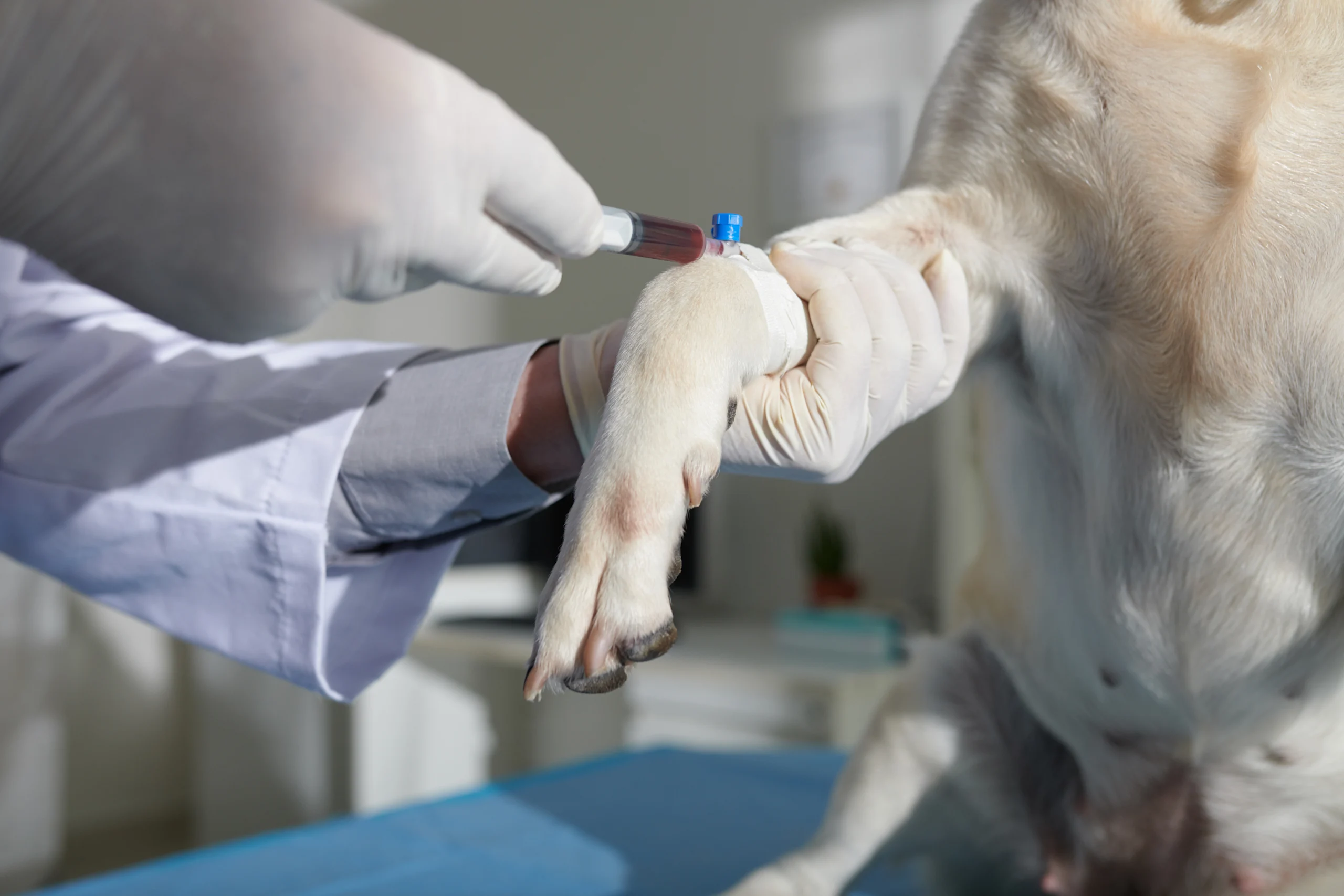
Cushing’s canine is a complicated disease with a somewhat complicated diagnosis. After an initial exam and history, blood work to check organ function and blood count will be performed. If signs point to Cushing’s, a vet will have a few diagnostic options to try.
Urine Cortisol Creatinine Ratio Test
Often used as an initial screener, measuring the urine cortisol creatinine ratio can help determine if a diagnosis of Cushing’s is on the table. Dogs with Cushing’s have an excess of cortisol that spills over into the urine. Measuring the levels of urine cortisol against a constant, the protein creatinine, it can point a vet toward further testing for Cushing’s.
ACTH Stimulation Test
Here a dog’s baseline cortisol level is checked via an initial blood test. A dose of ACTH is given and then cortisol levels are rechecked an hour later. This measures the adrenal gland’s ability to respond to ACTH release. Very high cortisol levels on the second test can be indicative of Cushing’s.
Low-Dose Dexamethasone Suppression Test
For a dexamethasone suppression test, baseline cortisol is measured with an initial blood sample. A dose of the steroid dexamethasone is given with a second blood draw taken after four hours and a third taken after eight hours.
Giving a steroid should cause the body to decrease its production of cortisol, since there is already plenty of steroid in the body. Dogs with Cushing’s will show only a minor decrease in cortisol or none at all following the administration of dexamethasone.
Abdominal Ultrasound or Radiographs
To further diagnose Cushing’s in dogs, a vet may use abdominal ultrasound or radiographs to look for changes in organs, such as liver enlargement, and to get a view of the adrenal glands to note any changes there.
Treatment for Cushing’s in Dogs
With the vast majority of Cushing’s cases in dogs stemming from pituitary issues, medical management is often the chosen route.
Medications for Cushing’s in Dogs
Medical management of both pituitary- and adrenal-dependent Cushing’s includes giving medications, mainly trilostane, which decreases the production of cortisol. It is required for a dog’s lifetime, and the dose may need adjusted in order to continue to have an effect. Side effects can include a decreased appetite, dog vomiting, and diarrhea.
Surgery for Cushing’s
Treatment of adrenal-dependent Cushing’s has the added option of surgical removal in most cases. Though surgery has been used to remove pituitary tumors as well, it is by far less common, risky, and very expensive.
Managing Iatrogenic Cushing’s
Iatrogenic Cushing’s can usually be reversed by gradually tapering the dose of steroid over the course of several weeks or even months. This allows the body to properly adjust to normal steroid levels.
Management of Cushing’s Disease in Dogs
Treating Cushing’s in dogs is a lifelong process. Any discontinuation of the medication can bring back the signs and issues.
Early-Stage Cushing’s Disease
In the early stages, your dog may only be exhibiting mild symptoms. Depending on concurrent health conditions and the severity of signs, your vet may have you monitor your dog’s signs and check in with them frequently before starting medications.
Advanced Cushing’s Disease
As the disease progresses, your vet will likely prescribe trilostane to better manage more severe symptoms. Lifestyle changes, including increasing protein intake, reducing sodium, and planning safe, low-impact exercises will also be musts. Stick with a routine that is familiar and comfortable.
Is Cushing’s Disease in Dogs Fatal?
Untreated Cushing’s in dogs or secondary complications, such as infections, can be fatal to dogs.
Life Expectancy: How Long Can a Dog Live with Cushing’s Disease?
How long can a dog live with Cushing’s disease? That depends on concurrent conditions and proper management. With the right management and regular veterinary care, dogs with Cushing’s will often live another two-four years or longer. Cushing’s most commonly occurs in middle-aged to older dogs, so there may be concurrent health conditions that have an impact.
Veterinary Costs for Cushing’s Disease in Dogs
Diagnosing Cushing’s in dogs is often a multi-step process and treatment is lifelong, both of which can contribute to high veterinary costs.
The initial diagnosis can run you $500-$1,5000, including basic blood work, specialized blood tests, and imaging. Monthly treatment costs of medications can be $35-$200+ depending on the size of your dog, and continued blood tests to monitor treatment can cost $100-$300 every three to six months. If surgery is an option, look to pay $3,000-$10,000+ for a specialist to remove the tumor +/- radiation.
Fortunately, if you have a dog insurance policy from Embrace Pet Insurance, some of those costs can be reimbursed, as long as you got your policy before your dog started showing symptoms of this cushings.
Prevention of Cushing’s in Dogs
There’s no way to prevent Cushing’s in your dog. The best way to reduce the likelihood is to purchase your dog from a reputable breeder that has done proper screenings to ensure they aren’t breeding dogs with a genetic propensity for Cushing’s.
Cushing’s Disease in Dogs FAQs
Untreated Cushing’s results in a decreased quality of life and potentially death for a dog due to secondary complications
More resources
Written by
Chyrle Bonk has been practicing veterinary medicine since 2010. Along with that, she fills her time writing veterinary content as a way to reach more pet owners than just those that come into the clinic. When not working, Dr. Bonk loves spending time with her family and critters somewhere outdoors.
Does pet insurance cover Cushing's Disease (Hyperadrenocorticism)?
Because Cushing's Disease (Hyperadrenocorticism) is typically a lifelong condition, timing matters: if it’s noted before your coverage begins, it’s considered pre-existing and wouldn’t be covered by any Pet Insurance. But with Embrace a pre-existing condition never disqualifies your pet from a policy, and new, unrelated conditions are still eligible.
Let’s get your pet covered
Call or click to get a quote
More conditions
Explore more health conditionsAddison's Disease (Hypoadrenocorticism)
Addison's disease (hypoadrenocorticism) occurs when a dog's immune system gradually destroys the adrenal glands, leaving the body unable to produce hormones essential for regulating stress response, blood pressure, and electrolyte balance. It's most often diagnosed in young to middle-aged dogs, requires lifelong hormone replacement therapy, and can trigger a life-threatening Addisonian crisis if left untreated.
Hypothyroidism
Hypothyroidism develops when a dog's immune system gradually destroys thyroid tissue, slowing the body's metabolism and causing weight gain, lethargy, and coat changes. It typically appears in middle-aged dogs and is a lifelong condition, well managed with daily thyroid hormone medication.
Diabetes Mellitus
Diabetes mellitus develops when a dog's or cat's body can't produce or properly use insulin, most often due to genetics, obesity, or age-related changes in middle-aged to senior pets. It's a lifelong condition managed with daily insulin and diet, and can become serious if left untreated.